
3 min read
Why a 40% Price Gap Between IT Proposals Should Be a Red Flag, Not a Win
Aaron Zimmerman
:
August 30, 2026
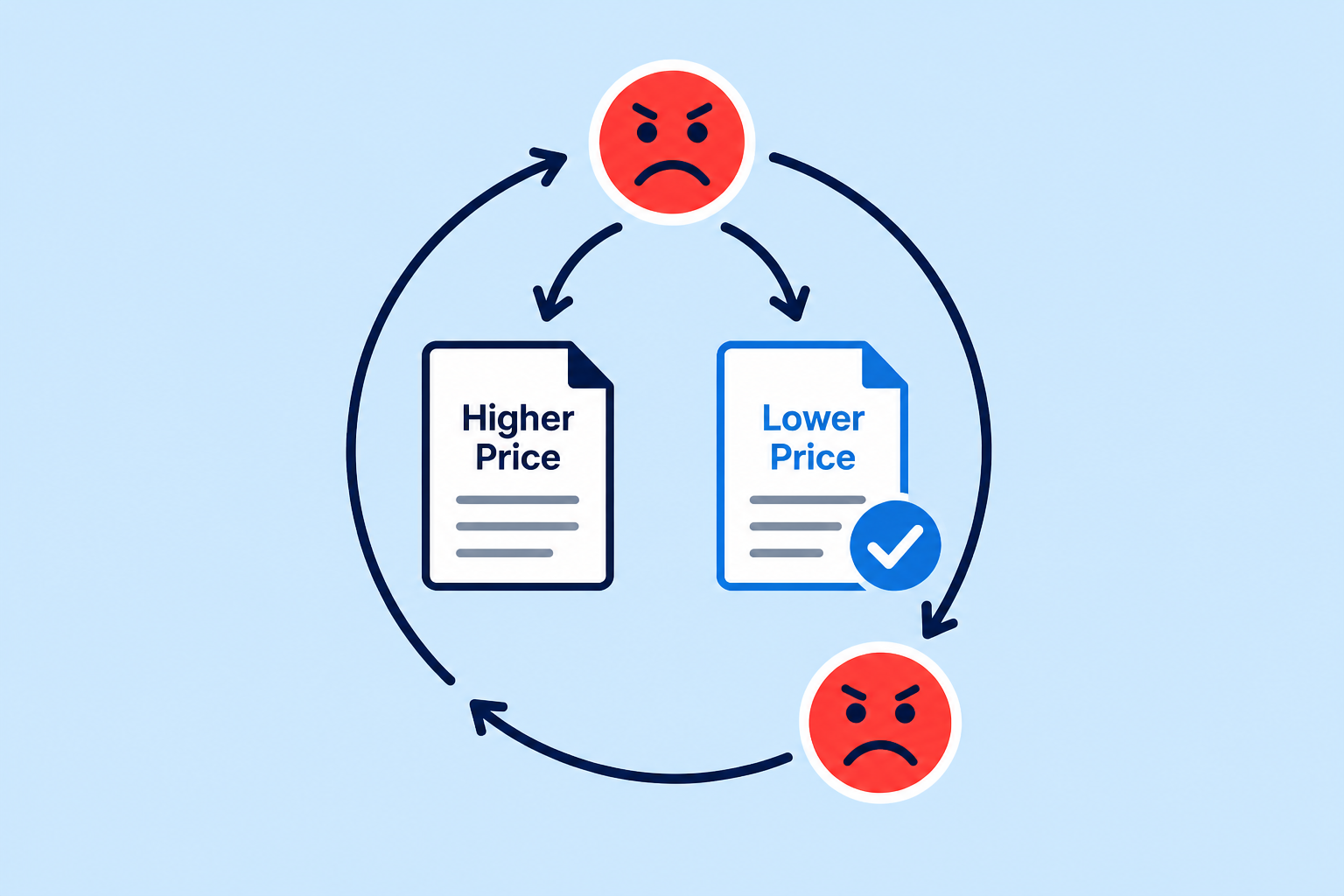
When you're reviewing proposals from IT providers, a significant price gap feels like good news. You're getting the same thing — or so the proposal says — for significantly less money. The smart business decision seems obvious.
But in the managed IT industry, a 40% price difference between two proposals for the same client isn't a deal. It's a signal that the proposals aren't actually for the same thing.
The Math Behind IT Service Pricing
Managed IT providers in the same market work with the same inputs. We use the same software vendors (security tooling providers, backup platforms, remote monitoring tools), and we negotiate from similar positions. We hire from the same local labor market, which means our engineer salaries are comparable. Our insurance, facilities, and overhead are all roughly similar.
When you strip away margin and look at the actual cost to deliver managed IT service at a given level, there isn't much room for a 40% gap between two legitimate providers serving the same client in the same region.
So when a gap that large shows up in proposals, one of two things is true: one provider is operating at essentially no margin — which isn't sustainable — or they aren't delivering the same service.
In our experience, it's almost always the second one.
What Gets Cut to Hit a Lower Number
Not all IT services are equal, and proposals don't always make clear what's actually included. The items most likely to be reduced or quietly removed when a provider needs to win on price:
The security stack. Basic antivirus is cheap. The layered security program a CMMC-obligated manufacturer actually needs — endpoint detection and response, 24/7 monitoring, log management, email security, identity protection, vulnerability management, SIEM ingestion — costs significantly more. It's also where the most impactful cuts happen when a provider is competing on price.
True vCIO service. Many MSPs include a "vCIO" line item that amounts to a quarterly check-in call. A real technology alignment function — someone who understands your business, builds a multi-year roadmap, advises at the leadership level, and helps you make strategic technology decisions — requires dedicated expertise and real time. When the price doesn't reflect that, the service usually doesn't either.
Compliance infrastructure. For companies operating under CMMC, DFARS 252.204-7012, or NIST 800-171, the compliance layer isn't optional — it's the whole point. Documenting controls, maintaining a System Security Plan, supporting your POA&M process, preparing for assessments — this work takes time. A provider who isn't pricing for it isn't doing it. We've covered what this actually looks like here.
Response depth. What happens when something goes wrong at 11pm on a Friday? The difference between a provider with genuine 24/7 incident response capability and one with an answering service isn't visible during normal operations. It becomes very visible in a crisis.
And during normal hours? Do they use an answering service or a non-techincal dispatcher? Or are they staffing to make sure that every call is answered by an engineer who can understand the problem and help right away?
The Proposal That Wins Isn't Always the One That Delivers
Defense contractors and aerospace suppliers are high-value targets for cyberattacks — and increasingly, high-scrutiny targets for federal compliance enforcement. The False Claims Act applies to CMMC self-attestations, which means certifying that your controls are in place when they aren't carries real legal exposure. The IT provider you choose is directly tied to whether those controls are actually in place.
A provider who won your business by cutting the security stack isn't just delivering worse service. They're contributing to a compliance gap that you'll be accountable for — not them.
What to Do When Proposals Don't Match
When you're looking at two proposals with a significant price gap, the question isn't "why is one so expensive?" It's "what does the cheaper one not include?"
Ask both providers to walk through their security stack in detail. Ask what's included in vCIO service and how many hours are allocated to it. Ask how compliance documentation is handled for CMMC-obligated clients. Ask what incident response looks like at 2am on a Sunday.
The answers will close the gap — not in price, but in understanding what you're actually being offered.
If you're working through proposals and want a straight conversation about what's driving the difference, contact TotalCare IT. We're happy to walk through it line by line.