

1 min read
From Firefight to Futureproof: A Cybersecurity Roadmap for Manufacturers
If you run a manufacturing business—especially one that blends IT with OT—you’ve likely been told to “get compliant” or “follow NIST.” But what does...
3 min read
Totalcare IT
:
Updated on July 15, 2026
When most Idaho manufacturers think about compliance, the first thing that comes to mind is OSHA safety standards, environmental regulations, or maintaining ISO certifications. But increasingly, cybersecurity compliance has become just as critical — especially for companies tied to the defense industrial base or those working with supply chains that demand security assurances. Two frameworks stand out: NIST (National Institute of Standards and Technology) and CMMC (Cybersecurity Maturity Model Certification).
For shop workers, plant managers, and executives, these standards might feel abstract — another layer of red tape on an already demanding business. But in practice, they’re about protecting your data, your contracts, and your reputation.
Idaho is home to manufacturers in sectors like precision machining, firearms, agricultural equipment, and aerospace components. Many of these industries supply the Department of Defense (DoD) either directly or through subcontractors. The DoD has made it clear: if you want to stay in the supply chain, you need to meet cybersecurity standards.
This isn’t just theory. In 2020, a Virginia-based defense contractor lost contracts after failing to meet NIST requirements, according to the DoD Inspector General. The case, brought by their own former Director of Engineering (as a whistleblower who will receive $1.5 million 😲), was settled this year and the defense contractors are set to pay the government $8.4 million.
Good question, and it trips up a lot of Idaho contractors.
NIST SP 800-171 is the set of security controls — 110 specific requirements covering things like access control, incident response, system monitoring, and configuration management. Think of it as the building code. NIST wrote it. It tells you what to implement.
CMMC is the enforcement mechanism — the DoD's way of verifying that defense contractors have actually implemented those controls. Think of it as the building inspector. The DoD created it. It determines how compliance is verified and whether you can bid on contracts.
When people say "we need to get CMMC compliant," what they really mean is: we need to implement NIST SP 800-171, document it, and be able to demonstrate it. CMMC is the process by which that demonstration happens — currently through self-attestation, eventually (once Phase II is resolved) through third-party assessment for Level 2 contracts.
The short version: NIST tells you what to do. CMMC makes sure you did it.
Shop workers may notice new requirements like logging into systems with two-factor authentication or scanning USB drives before use. While it might feel like an inconvenience, it prevents malware from entering critical production systems.
Plant managers are responsible for ensuring machines and networks stay up. A ransomware attack that locks down a CNC machine or automated saw could bring an entire production line to a halt — missing delivery deadlines and jeopardizing contracts.
Executives face the highest stakes. Without compliance, you may be disqualified from lucrative contracts. Worse, if a breach exposes sensitive data, you risk lawsuits, fines, and damage to hard-earned trust in industries where relationships matter.
The NIST Cybersecurity Framework (CSF) 2.0 is widely recognized as the gold standard. Its six functions give manufacturers a clear roadmap — starting with Govern, which was added in the 2024 update and sits above everything else because your security posture is only as strong as the decisions and accountability structures behind it:
Identify: What assets are critical (production line PLCs, maintenance laptops, ERP systems)?
Protect: How do you keep them safe (MFA for remote logins, segmented OT networks, updated firewalls)?
Detect: How quickly can you spot an intrusion (24/7 monitoring, OT anomaly detection)?
Respond: Who takes charge during a breach?
Recover: How fast can you restore production and ship orders on time?
This isn’t theory—it’s practical. Consider the 2020 ransomware attack on Honda that shut down plants globally, halting assembly lines for days. Or Visser Precision (a parts supplier for aerospace and automotive) was hit in 2020, forcing production delays and exposing sensitive intellectual property. Both companies faced costs that ran into the millions—all preventable with stronger adherence to frameworks like NIST.
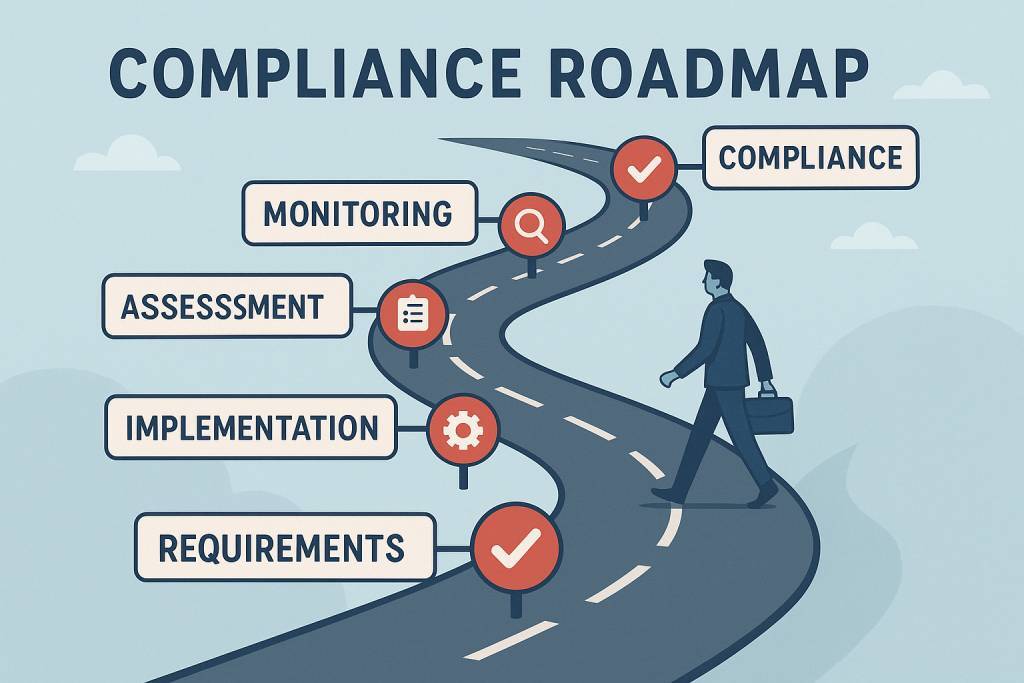
Becoming compliant doesn’t happen overnight. The first step is a gap analysis — understanding where your business falls short of NIST or CMMC requirements. From there, a roadmap can be built to close the gaps, whether that’s implementing stronger access controls, encrypting sensitive data, or training staff on phishing risks.
It may feel like an investment in paperwork and IT, but compliance is increasingly a ticket to the game. Without it, Idaho manufacturers risk being locked out of supply chains that fuel growth.
Bottom line: Compliance with NIST and CMMC isn’t just about IT. It’s about protecting your contracts, securing your supply chain, and ensuring Idaho’s manufacturers remain trusted partners in the global economy. If that's your situation, what's happening with CMMC right now is worth a read — including the July 2026 Phase II suspension and what it means for Idaho DIB companies.
1 min read
If you run a manufacturing business—especially one that blends IT with OT—you’ve likely been told to “get compliant” or “follow NIST.” But what does...
1 min read
If you're an Idaho company doing business with the Department of War — whether as a prime contractor or a subcontractor — CMMC has been a moving...
1 min read
If you're an Idaho defense contractor navigating CMMC compliance, you've probably run into the term POA&M. What an acronym — CMMC has several of...