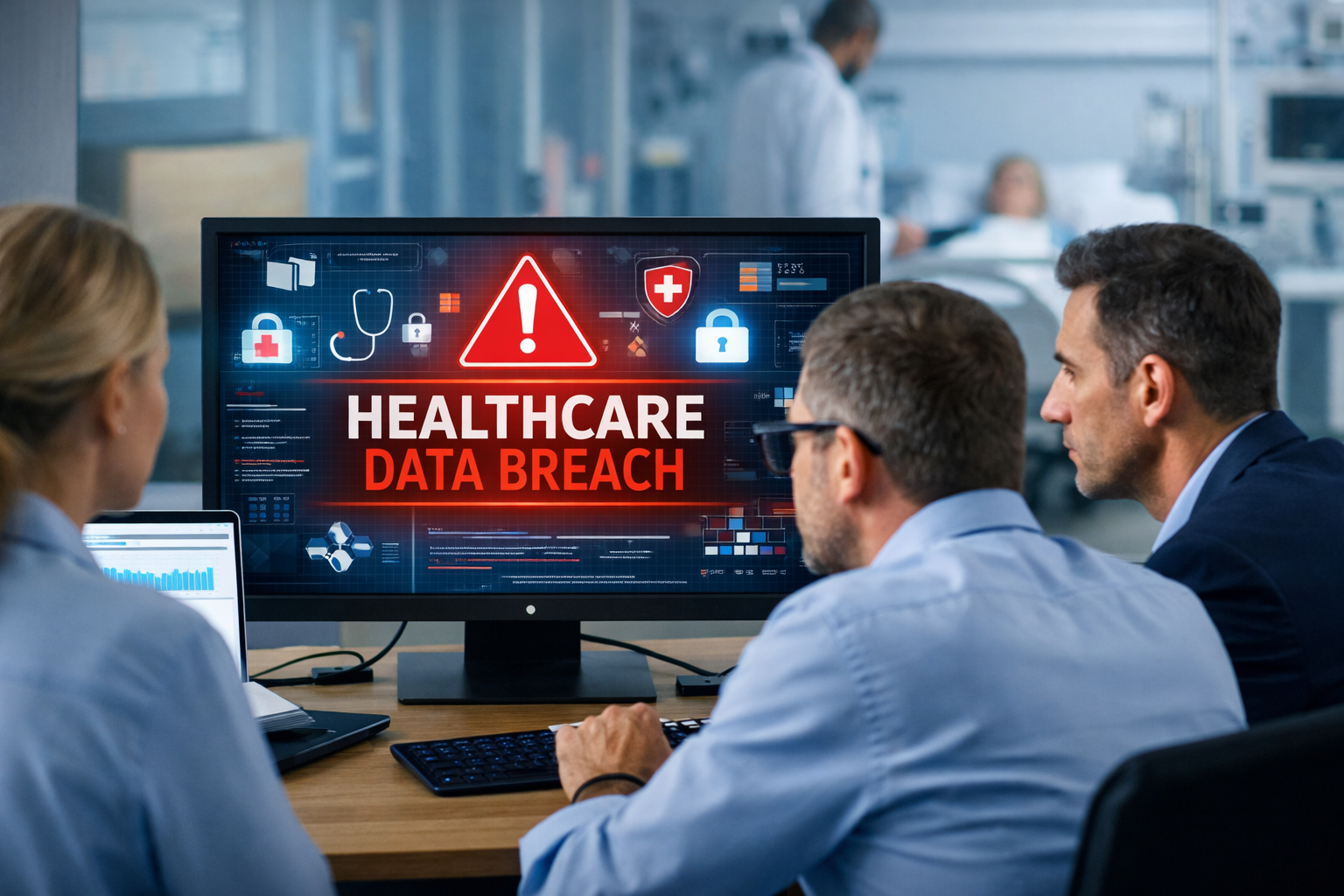

Why 2026 Is Starting With Healthcare Breaches And Why This Matters to Non-Healthcare Businesses
If it feels like cybersecurity headlines are already coming in hot this year, you’re not wrong. 2026 kicked off with continued fallout from several ...
3 min read
Totalcare IT
:
Jan 19, 2026 10:00:00 AM
If you’ve been paying attention to cybersecurity headlines lately, you’ve probably noticed something that sounds like the plot of a spy thriller — but is playing out in real life.
From claims of hacking into U.S. broadband providers to alleged intrusions into email systems used by U.S. congressional staff, cyber activity linked to foreign threat actors has been especially active in early 2026. (TechRadar)
But here’s the twist: you don’t need to be the headline to be a target — you just need to be connected to something that is the headline.
That’s especially true if your business works with critical infrastructure, government contractors, or other organizations that sit downstream from larger networks.
Let’s look at what’s currently happening:
Brightspeed, one of the largest U.S. fiber broadband providers, is investigating a potential data breach after hackers claimed to access sensitive customer data, including personal information for what could be more than a million customers. (TechRadar)
This matters for businesses because:
Hackers often sell or reuse stolen data in future campaigns
Compromised user data can feed credential stuffing and phishing attacks
Partners and vendors can end up on attack lists by association
Reports emerged that email systems used by U.S. congressional staff were targeted by foreign-linked cyber actors — a situation discussed by multiple sources, though official attribution is disputed. (Reuters)
This shows something important: attackers aren’t limiting themselves to consumer data or shopping sites anymore — they’re probing government access points, where trusted credentials may open other doors.
Hackers are reportedly offering engineering data tied to major utilities — including files related to Tampa Electric, Duke Energy, and American Electric Power — for sale online. (IT Pro)
These kinds of breaches affect:
Utility supply chains
Third-party construction and engineering firms
Any business contracted by critical infrastructure operators
This matters for any organization connected to infrastructure because supply chain trust is now a major attack vector.
You might think:
“This sounds like a threat to big utilities or government, not my company.”
Here’s the reality:
Cybercriminals and state-linked actors look for pathways, not just targets. That means:
A small contractor’s credentials can be a stepping stone
VPN or cloud accounts with weak authentication are invitations
Shared or reused passwords make your business a useful launch point
Research shows that most breaches involve credential theft or phishing, not exotic malware. (Breachsense)
Even when cyber activity starts with a major headline breach, the effects spread:
When big breaches happen, stolen or exposed data quickly turns into phishing campaigns aimed at:
Business owners
Employees
Partners and vendors
These aren’t just random emails — they’re targeted and often convincing.
Once credential info is available, attackers use credential stuffing and password-spraying techniques to breach unrelated business accounts. (Breachsense)
If you work with larger organizations, especially in utilities, government, or healthcare, your systems can become a weak link — and attackers know that.
You don’t need to be a cybersecurity expert — just proactive:
Use multi-factor authentication on all accounts
Disable unused accounts and check admin privileges
Use a password manager
If your business:
Works with other vendors
Shares cloud services
Uses remote access tools
…then you’re part of a larger network ecosystem that attackers target.
Emergency response planning isn’t just for enterprises:
Have a tested backup strategy
Know who to call if something goes wrong
Train employees to spot and report phishing attempts
At TotalCare IT, we help companies implement these kinds of defenses without turning cybersecurity into a full-time job.
Yes — foreign cyber activity hitting U.S. infrastructure and organizations makes headlines. (TechRadar)
But your business doesn’t need to be a headline to be affected.
What matters more today is:
Are you prepared to break the chain before attackers use your business as the next link?
At TotalCare IT, we believe cybersecurity isn’t about fear — it’s about readiness, resilience, and practical protection that works for real companies.
👉 Contact TotalCare IT to get your free security assessment.
If it feels like cybersecurity headlines are already coming in hot this year, you’re not wrong. 2026 kicked off with continued fallout from several ...

In a world increasingly connected through technology, privacy and security are top priorities for anyone using the internet—especially for American...
Determining how much risk your organization is willing to take isn’t a decision that can be outsourced or relegated to a report. It’s a choice that...